The Journal of Obstetrics and Gynaecology of India
did-you-know
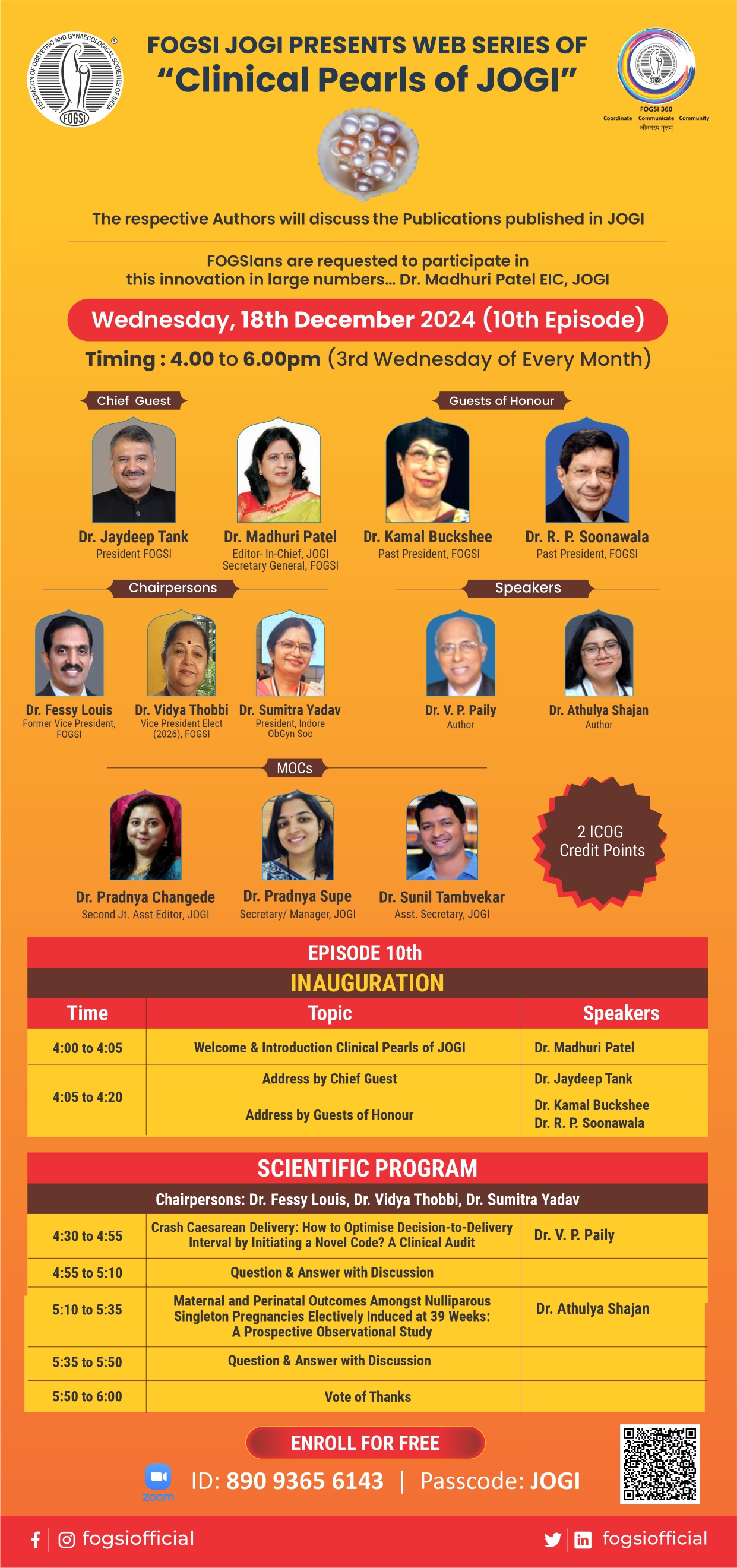
Clinical Pearls of JOGI SERIES OF WEBINARS Click her to view
VOL. 63 NUMBER 1 January-February  2013

Pica Causing Neurocysticercosis in Pregnancy Presenting as Eclampsia: A Report of Two Cases

Sahai Shweta ● Sahai Atul

Sahai S. (&), Assistant Professor
Department of Medicine, Gajra Raja Medical College, Gwalior, India
e-mail: sahai_2004@yahoo.co.in

Sahai A., Consultant Neurosurgeon
Birla Institute of Medical Research, Gwalior, India

  • Download Article
  • Email Article
  • Print Article
  • Whatsapp Article


Introduction

Eclampsia of pregnancy is a multi system disorder,which is commonly suspected whenever a woman presents with the clinical picture of elevated B.P. and convulsions. Neuro- cysticercosis is a common parasitic infestation of the cen- tral nervous system (CNS) caused by the pork tapeworm (Taenia solium) and is common in India [1]. The patient presents with focal seizures, with or without loss of con- sciousness and has been proved to be as common amongst vegetarian probably to improper washing and incomplete cooking of vegetables. The CNS diagnosis of cerebral cysticercosis is clinched by:

  1. The typical CT findings of enhancing ring or nodular lesions ranging from 5 to 20 mm in diameter, in any part of the brain. There may be a punctate, eccentric, high density structure suggestive of scolex, seen in  44 % of cases. MRI shows characteristic hypointense ring with a hyperintense or isointense centre [2].
  2. Pica is an eating disorder defined as the persistent eating of non-nutritive substances practiced in many societies in India during pregnancy. Geophagia, or ingestion of soil, clay etc. may lead to parasitic infestations. Two cases of Neurocysticercosis in pregnancy caused by pica which were initially treated as cases of Eclampsia are presented.

Case 1: A 25 years old vegetarian woman in the 28th week of gestation was admitted with generalised tonic– clonic convulsions, bilateral pedal oedema and a BP of 140/90. Fundus examination showed papilloedema and CT scan revealed multiple ring enhancing lesions surrounded by hypo-intensity due to perifocal oedema. There was a single lesion at the pontomedullary junction and one in the cerebellum. The lesions were hyper-intense on T2WI and hypo-intense on T1WI. The lesions showed eccentric nodules (Fig. 1).

Case 2: A 22 years old woman in her 27th week of gestation presented with left sided simple focal seizures. Her BP was 136/94 and MRI of the head revealed a single ring lesion in the right parietal lobe with an eccentric nodule. There was perifocal oedema on T2WI, and the lesion was hypo-intense on T1WI (Fig. 2).

These two women initially diagnosed and treated as cases of Eclampsia were given Albendazole therapy with anticonvulsants after diagnosis (Fig. 3).


References

  1. Prabhakar S, Syal P. Neurocystieercosis: clinical and diagnosticdilemma-editorial. JAPI. 1999;47:473–5.
  2. Garg RK, Kar AM, Kumar T. Neurocysticercosis like presentationin a case of CNS tuberculosis. Neurol India. 2000;48:260–2
  • Download Aarticle
  • Email Aarticle
  • Print Article
  • Whatsapp Article